Beyond Borders: A New Chapter in Global Student Movement | 2025 Year-End Report by Leap Scholar

February 18, 2026

Krutika Thalnerkar

Senior Content Writer | Leap Scholar

If 2024 was about “wait and watch,” 2025 was the year Indian students officially broke the mold. We have seen a massive transition from “hoping for the best” to “calculating the best”, where every degree is scrutinised for its global market value.  After analyzing the journeys of 3 million students, the data tells a powerful story: In 2026, you aren’t just an applicant; you are a strategic investor. The old question “Can I afford to go?” has been replaced by the high-stakes reality: “What will this degree actually give me?“


Beyond the traditional hubs, a “Great Destination Shift” is underway. From the growing interest in the UAE to the strategic rise of tuition-free Germany, Indian students are redrawing the global map in search of affordable excellence. With AI Master’s interest skyrocketing and working professionals leading the race to upskill, the 2026 intake is no longer about just a degree; it is about securing a seat in the future of work.


Aspirant Profile & Demographics


The demographic profile of Indian aspirants in 2024–25 exhibits a structural shift compared to the cohort from three years earlier. Analysis of data from over three million applicants and survey respondents on the Leap Scholar platform indicates a transition in the broader educational landscape.


Age Distribution


While the primary age distribution follows established patterns, granular analysis reveals specific compositional changes:


The data indicates that while the majority of aspirants (65.5%) are in the 18-25 age bracket, there is a significant cohort of mature students. Notably, over one-third of the applicants are aged 26 or older, suggesting a trend of working professionals seeking qualifications later in their careers.


Gender Distribution


The gender gap remains evident, with male applicants constituting 58% of the aspirant base compared to 42% for females. However, this gap is narrowing, particularly with more women pursuing STEM programmes abroad.


What Students Are Interested In Studying - Degree Level Distribution 2025
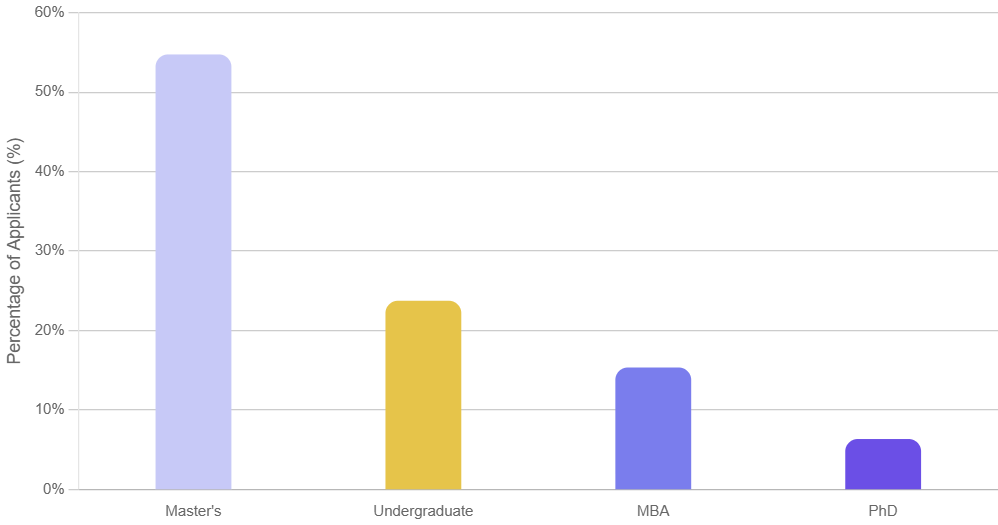
Master’s programmes are overwhelmingly the most popular choice, as students seek specialised skills after completing affordable undergraduate degrees in India. PhD interest has also surged to over 6% this year, a 60% increase compared to the previous year, signalling a growing appetite for research careers.


Financial Determinants of Mobility


While career aspiration initiates the decision-making process, post-study career advancement governs the final matriculation.

Post-Study Career Advancement as Critical Driver


Candidates seek clear career pathways rather than academic credentials alone when deciding to study abroad.  Students aren’t just looking for degrees. They’re looking for clear pathways to global careers.


Cost Sensitivity as a Secondary Driver


Survey data indicates that price sensitivity is currently at an all-time high. This renewed focus on affordability correlates with the substantial surge in interest to destinations like the UAE, New Zealand and the continued interest towards Germany.


What’s Driving These Choices?


Contemporary students prioritise clear employment pathways and return on investment (ROI) over mere credentialism. The high concentration of enrolments in Master’s and MBA programmes reflects market signals identifying these qualifications as conduits to high-value global roles.  Since 2020, a surge in PhD demand has further highlighted an intensified focus on research sectors, particularly artificial intelligence and biotechnology.


Financial strategy remains a dominant force. With 68% of students citing affordability as a top priority, cost sensitivity is driving a tangible shift towards value-centric destinations such as Germany. Students are selecting locations based on long-term economic viability.


The aspirations for international study are undergoing genuine democratisation, driven by digital access and career clarity rather than geography. Post-study career advancement is pivotal, with 85% of applicants rating it a top concern.


This reinforces the view of international education strictly as a strategic career investment. The modern student cohort is more diverse and intentional, funding their pursuits with prudent financial planning focused sharply on employability.


The AI Revolution in Global Education


A profound transformation in the educational approach of Indian students pursuing studies abroad has emerged over the last two years, initially spurred by the launch of ChatGPT in November 2022.  Specifically, Master’s degree programmes in artificial intelligence recorded a striking 186.2% year-on-year increase between 2023 and 2024. This dramatic growth occurred even as enrolments in more traditional Computer Science disciplines experienced a concurrent decline. This trend signifies a strategic recognition that artificial intelligence will define the future of work across all professional sectors.


The ChatGPT Effect: AI Tools in the Student Journey
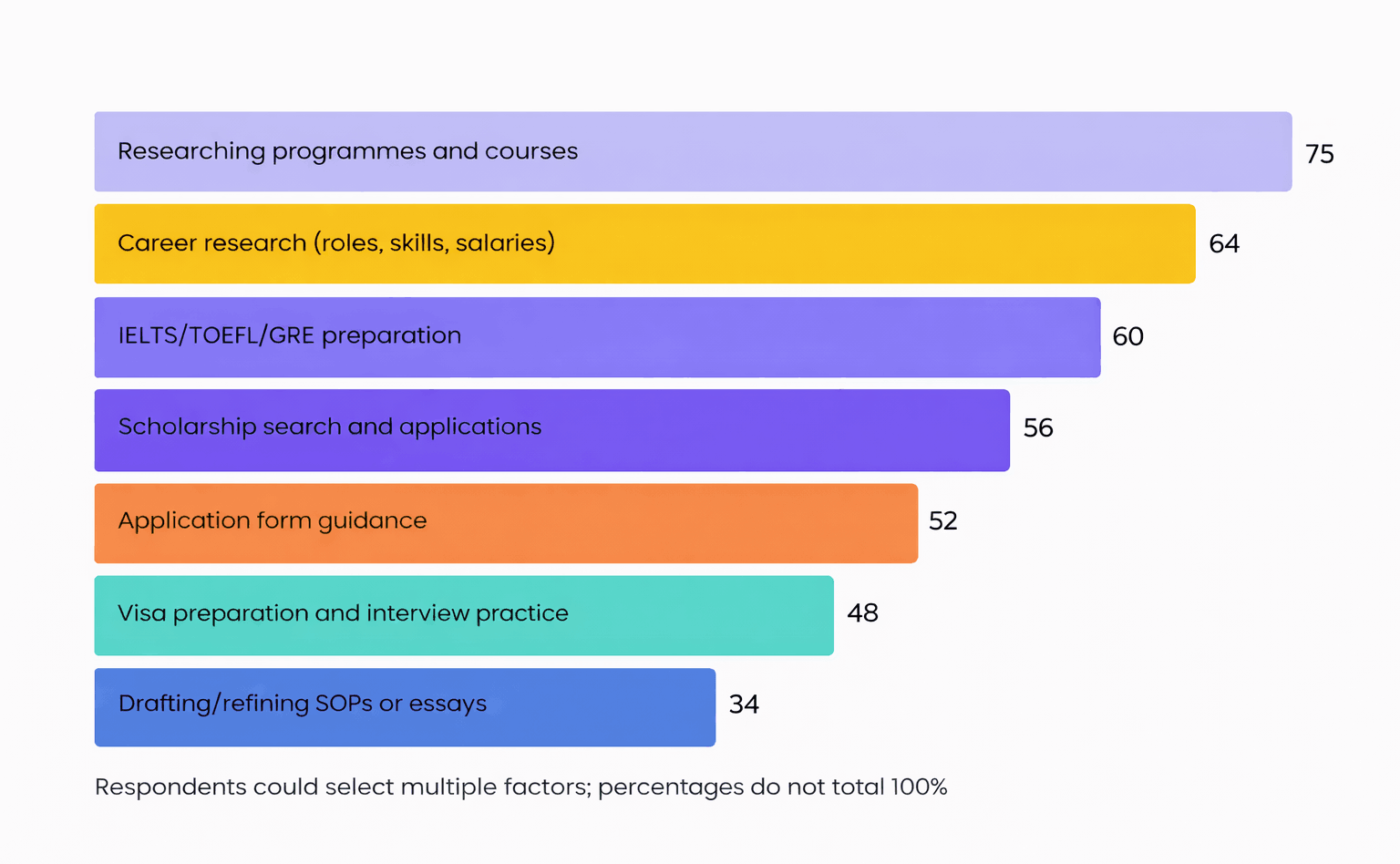
Students are heavily relying on AI tools for the initial stages of their journey, with 75 per cent using them to research programmes and courses. The usage decreases for more personal tasks like drafting SOPs (34%), indicating students still value human input for subjective application elements.


This technological shift is generating democratising effects within the admissions landscape. Students without access to specialist counselling can now receive immediate, sophisticated guidance on programme suitability. Similarly, individuals preparing for examinations like the IELTS without expensive coaching can utilise AI tutors for practice.


Which Countries Are AI Aspirants Looking At?


Students were enabled to nominate multiple potential destinations for pursuing AI-related disciplines. Analysis of these preferences reveals patterns that simultaneously align with and deviate from broader international mobility trends.
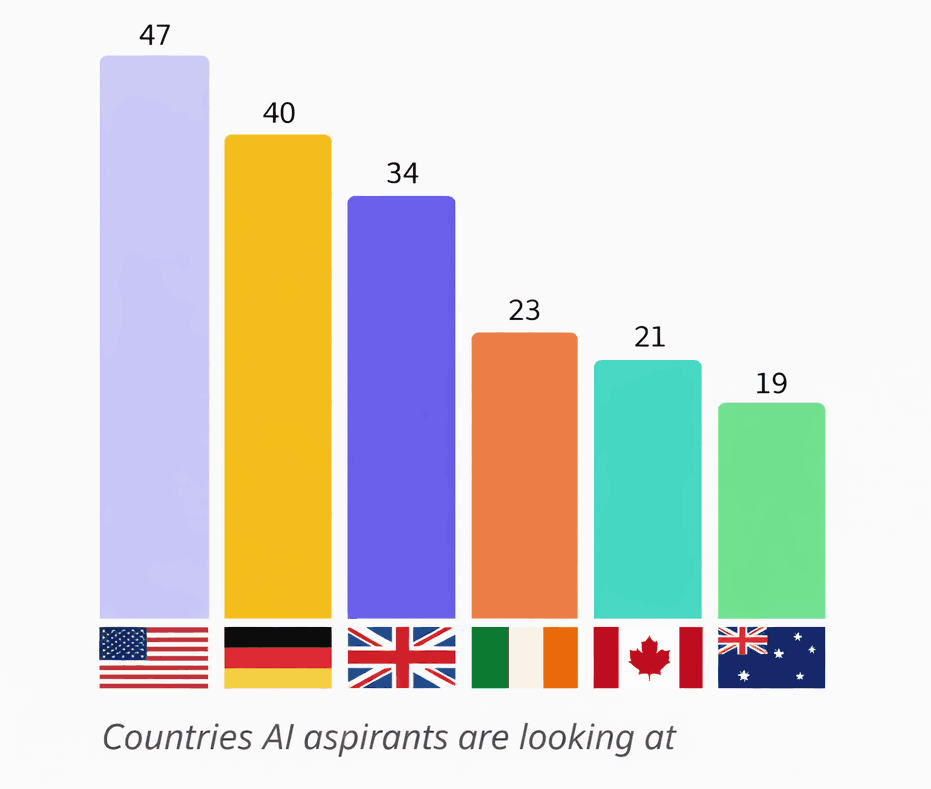
Why AI? Motivational Drivers and Strategic Intent


When we asked students why they are pursuing AI education abroad, their responses revealed a picture of pragmatic ambition.  Nearly half of the students (49.9%) aim to upskill within their existing domain, rather than switch fields entirely. However, a substantial 22.5% are looking to completely pivot their careers into AI, viewing it as a pathway to better opportunities in a saturated job market.


The prevalence of upskilling suggests that, rather than abandoning their primary disciplines, professionals are acting to integrate AI capabilities into their existing expertise. For instance, marketing specialists are seeking proficiency in AI-driven consumer analytics, whilst finance graduates aim to master algorithmic trading. Consequently, artificial intelligence is emerging as a universal competency across industries, necessitating fluency for career progression.


Distinct from those upskilling, approximately 20% intend to pivot their careers entirely towards AI. These individuals, often migrating from saturated professional fields, identify artificial intelligence as a trajectory towards more robust and sustainable employment prospects. This shift signifies the nascent stages of a fundamental restructuring in global education and workforce dynamics. Projections suggest that within a decade, a deficit in AI literacy may become a professional liability comparable to a lack of proficiency in Microsoft Excel today.


The Long-Term Implications


What we are witnessing is the early stage of a fundamental restructuring of global education and work. Ten years from now, a lack of understanding of AI may be comparable to not knowing MS Office today.


For Indian students specifically, this juncture presents a duality of challenge and opportunity. The primary challenge involves maintaining alignment with rapid technological evolution to select enduringly relevant programmes. Conversely, the opportunity is rooted in India’s substantial technical talent pool and expanding AI industry, which collectively position the nation to cultivate global leadership in this sphere.


Ultimately, the observed cohort is not merely adhering to a passing trend but executing strategic decisions regarding the skills that will define the coming decade of employment. The emerging consensus is definitive: artificial intelligence represents the immediate reality of education rather than a distant future.


The Great Destination Shift


Germany’s competitive position in higher education relies on its distinct funding model. In contrast to the United States or the United Kingdom, where degrees often cost USD 50,000 to USD 80,000, most German public universities remain tuition-free. Scholars typically incur only USD 1,500 in administrative charges for a full two-year programme.


To mitigate historical language barriers, institutions have rapidly expanded English-medium curricula, especially within STEM faculties. This strategic pivot is essential for integrating international talent into the domestic academic system.


Post-graduation, the nation’s immigration policy facilitates retention through an 18-month job-seeking residence permit. As Europe’s largest economy faces a skilled labour shortage in technology, the transition from study to permanent residency offers a favourable trajectory for graduates.


The United Arab Emirates has successfully positioned itself as a global education hub, utilising free zones to host international branch campuses at competitive price points. For students targeting post-study employment within the Middle East, the region serves as a strategic entry point. Furthermore, geographic proximity remains a decided advantage; flight durations from India average three to four hours, offering families reassurance compared to the long-haul travel required for destinations in North America.


Crucially, the UAE offers a middle path for students seeking international exposure without the prohibitive costs often associated with Western higher education. While academic programmes generally cost more than tuition-free options in Germany, they remain more affordable than comparable degrees in the United States or the United Kingdom. Additionally, the living environment provides a degree of cultural familiarity that significantly aids the transition for Indian students.


For study abroad counsellors and educational institutions, comprehending these trends is imperative. The decision-making paradigm for students has evolved beyond simple destination selection. Applicants now prioritise locations that ensure fiscal prudence, provide relevant skill acquisition, and offer distinct pathways to desired careers. Consequently, the nations that address these pragmatic criteria most convincingly are securing a competitive advantage in the recruitment of Indian talent.


Looking Ahead – 2026 and Beyond


As we conclude this analysis, it is necessary to reflect on the future trajectory of Indian student mobility based on the data collected from over 3 million student interactions between 2020 and 2025. The insights derived from this extensive dataset, combined with qualitative feedback, suggest that distinct patterns will govern the landscape in 2025 and beyond.


The transformation driven by artificial intelligence is currently in its nascent stages but is accelerating rapidly. Empirical data indicates a 186.2% year-on-year growth in AI-focused Master’s programmes between 2023 and 2024, signalling a massive shift in student interest. We anticipate that AI components will standardise across nearly every postgraduate discipline within the next five years.


This integration will likely see business programmes incorporating AI-driven analytics and healthcare courses embedding AI diagnostics. Consequently, the distinct advantage will belong to students who position themselves at the intersection of AI and domain expertise. While 36.2% of aspirants currently pursue specialised degrees in AI or Data Science, a significant 59.6% are opting for broader Master’s programmes with AI components, indicating a strategic preference for hybrid competence.


The operational side of education is evolving in tandem with curriculum changes. With approximately 75% of student interactions now occurring via mobile devices, the reliance on digital tools is absolute. We are already observing students utilising generative AI to research programmes and draft application materials. Future counselling frameworks will likely leverage AI to match students to universities based on deep data analysis, democratising access to guidance.


Economic pragmatism is reshaping destination preferences, with 68% of students now rating programme cost and affordability as a top priority. This financial sensitivity is driving a migration towards nations offering high value. Germany has witnessed a staggering increase in interest since 2020, driven largely by its affordability; the estimated total cost for a degree in Germany ranges from 10 lakh to 20 lakh, compared to 50 lakh to 75 lakh in the United States.


We observe similar traction for emerging hubs like the United Arab Emirates, which appeals due to its proximity and the presence of international branch campuses. Even within traditional strongholds like the United Kingdom and the United States, demand is likely to shift towards mid-tier institutions in affordable cities. Students are increasingly prioritising return on investment over prestige, seeking locations that balance educational quality with financial viability.


India currently exports human capital at a significant scale, yet the demographic composition of these aspirants suggests potential for reverse migration. Notably, 36% of AI aspirants are already working professionals, with many possessing between three and six years of experience. These individuals are upskilling with the intent of securing high-impact careers rather than merely seeking entry-level roles.


As India’s technology sector matures, these globally trained professionals may return to drive domestic innovation. This cyclical flow of talent, mirroring developmental patterns seen in other major economies, could significantly bolster the local tech ecosystem. Students equipped with global expertise and AI literacy will be well-positioned to lead India’s digital future upon their return.


Final Thoughts


The era of speculative study abroad has yielded to a focus on calculated ROI. The metrics highlight this pragmatic transition, evidenced by a 186.2% year-on-year rise in AI programme enrolments and 75% of students now utilising AI tools for programme research. These figures indicate a student body prioritising fiscal value and efficiency over traditional prestige.


We are witnessing a mature cohort where 36% of aspirants are experienced professionals and nearly 60% opt for broader Master’s programmes incorporating AI components. Their decisions are driven by clear demands, with 85 per cent prioritising post-study work rights and 68% focusing on affordability. As India’s technology sector matures, this strategic investment bridges global ambition with economic reality.

January 2, 2026
Over the last couple of years, we have seen the emergence of AI’s use in international student recruitment and how it is reshaping the industry. There seems to be a mix of early, enthusiastic adopters, and those who just hope it will go away. But it isn’t going away. Our latest student survey found that almost one-third (30%) of respondents would use AI to write their applications, with 40% saying maybe, but they were unsure of whether it was ‘allowed’. We owe it to the students we serve, to incorporate AI into our ways of working for better service in recruitment, make the process transparent so they are clear on terms of use, and offer guidance and AI’s best practices to ensure their readiness for the global economy. And we must do it in a safe, compliant way. Some institutions and recruitment agencies are also benefitting from AI’s use, from optimising processes to reduce peak workload administration to offering on-demand information to students across different time zones with chatbots. Those who have already integrated AI are a step ahead. Its advantages continue to grow as more stringent visa checks and compliance pressures increase already stretched workloads processing student applications to the US. Historically, the admissions process has been highly time-consuming and prone to human error. But with the use of AI, one can harness the data and predictive power to make it all the more efficient. A competitive advantage, recruiting the best students AI’s ability to screen and prioritise high-quality applications ultimately means students can make their destination decisions more quickly. This speed is a competitive advantage; students are more likely to act on an offer rather than wait for others. This ensures the best students are engaged early, improving the quality of your applicant pool. Edvoy’s Genie is an AI course matching tool. It analyses 200+ data points to assess the likelihood of a student’s application success. The data points include academic qualifications, budget, and entry requirements. By pre-qualifying the student much before the application is submitted, AI helps save time for universities, which would otherwise be wasted on ineligible applicants. AI in compliance, navigating stringent visa checks Any change to visa requirements puts more pressure on compliance procedures. AI can conduct thorough pre-vetting processes to catch any inconsistencies, which is a major boost to application integrity. It can also be used to assess mock interviews for credibility checks, ensuring the student’s verbal communication aligns with their written application. AI can also help as a final compliance check, where it analyses student profiles and flags unexplained study gaps or complex financial histories for mandatory human intervention before the issuance of the I-20 form. This helps universities maintain their reputation and high visa success rates. With this strategic handholding by AI, recruitment partners and universities can focus on more important tasks, such as personalised student guidance and relationship-building. The ethical responsibility of AI But with every powerful tool comes ethical responsibility. At Edvoy, we firmly believe that while AI helps boost efficiency and processes, its predictive nature comes with the potential bias of what a successful applicant is. Leaving it unchecked could result in unfairness. Edvoy uses a number of tools to actively safeguard us against existing biases. For example, the data supplied to our systems, such as Genie, covers diverse demographic groups to ensure balanced outcomes. Additionally, it’s built with XAI or Explainable AI, which helps humans understand the rationale behind the AI results (and in our case, Genie’s recommendations), making it easy for us to monitor and improve the system. AI isn’t going anywhere; it has the ability to greatly enhance our ways of working, and can make education more accessible across the globe. We must work together to inform students of best practices and ensure that transparency and ethical accountability remain at the heart of every use.
November 21, 2025
As global student mobility enters a period of rapid transformation, U.S. colleges and universities are facing new challenges: shifting visa trends, rising competition from Canada and the UK, economic pressures on families, and a saturated digital recruitment environment. In this landscape, strong, ethical, and data-driven partnerships between universities and recruitment agencies are emerging as the most reliable solution for sustained international enrollment growth. With India poised to remain the world’s largest outbound higher education market , and the U.S. retaining its spot as the number-one study destination, universities must rethink how they engage with agencies to build resilience, quality, and long-term recruitment success. This blog explores what U.S. institutions must do differently in 2025 , how recruitment partners like Texas Review add value, and what a successful university–agency ecosystem looks like in the years ahead. Why Strong Partnerships Matter Now More Than Ever 1. Student Markets Are Volatile  Visa changes, geopolitical shifts, affordability concerns, and job market news can influence student flows overnight. Agencies on the ground provide real-time market intelligence universities cannot access directly. 2. Digital Marketing Alone Is Not Enough Students still want: In-person guidance Application support Financial planning help Visa preparation Career pathway counselling Agents remain critical touchpoints for students and families. 3. Quality Over Quantity Is The New Priority Universities are increasingly focused on: Retention Career outcomes Diversity Academic readiness Well-trained, high-integrity agencies play a major role in ensuring students are the right fit. The Four Pillars of a Strong University–Agency Partnership To thrive in 2025 and beyond, universities must shift from transactional interactions to structured, collaborative, and transparent relationships. Pillar 1: Shared Market Intelligence & Data-Driven Decision Making Universities often rely on historical trends, but markets move fast. Agencies provide: Real-time insights on student preferences Competitive pricing intelligence Demand by program and study level Barriers affecting specific regions Policy awareness (visa, immigration, scholarship trends) In return, universities should share: Conversion data Program competitiveness Application volume insights Enrollment bottlenecks This two-way intelligence helps institutions adjust programs, pricing, marketing, and communication strategies. Pillar 2: High-Quality Training for Counsellors One of the biggest gaps in international recruitment is counsellor-level program understanding . Universities should offer: Monthly product trainings Webinars with faculty Recorded demos of labs, facilities, and student services Detailed admissions guidelines Clear visa and compliance updates Scholarship and assistantship insights When counsellors are well-trained, they: Recommend the right programs Improve student preparedness Reduce deferrals and drop-offs Enhance application accuracy Boost conversion Pillar 3: Streamlined Admissions & Student Experience Indian students are heavily influenced by how fast and transparent the admissions process is. Universities should: Make Applications Easier Accept unofficial transcripts for initial review Offer digital document verification Allow trusted partners to pre-screen applications Reduce dependency on expensive credential evaluation services Improve Processing Speed 6–8 week decisions no longer work. Students expect: 10–20 day initial review Fast I-20 issuance Clear communication on missing documents Increase Transparency Provide agents with: Reasons for rejections File status dashboards Timeframes for review stages A transparent system builds trust and speeds conversions. Pillar 4: Collaborative Marketing & Outreach Agencies like Texas Review run: Multi-city education fairs Targeted school and college outreach Digital campaigns Counsellor training meets Alumni meetups University spot admissions sessions Universities should participate through: Faculty-led talks Virtual masterclasses Program spotlight sessions Alumni testimonials On-ground visits at peak times This creates massive visibility and positions institutions as top-choice destinations. How Texas Review Adds Value to University Partners Texas Review, with its 13+ years of experience in U.S. student recruitment, brings a combination of scale, quality, and insights: 1. Market Leadership 350-member recruitment team Strong presence across India’s Tier 1, 2, and 3 cities Extensive student counselling reach Deep understanding of U.S. program trends 2. Ethical, High-Compliance Recruitment Counsellor training Pre-screening based on university criteria Document verification Visa readiness checks SEVIS and compliance awareness 3. Program Promotion Strategy Especially for STEM programs beyond Computer Science: Public health Environmental sciences Robotics Data analytics Bioinformatics Supply chain Aviation / aerospace Healthcare informatics 4. Conversion-Focused Admission Support Application-quality checks Timely submissions Scholarship guidance Visa preparation 5. In-depth Market Analytics Region-wise demand Program-specific interest levels Behavioural shifts Competitor insights What Universities Can Do in 2025 to Build Sustainable Pipelines 1. Diversify Program Marketing Move beyond CS and promote: Emerging STEM Research-intensive programs Affordable tracks Hybrid and co-op oriented degrees 2. Strengthen Affordability Options Offer: Scholarships for Indian students Early payment discounts Research assistantships Instalment-based tuition plans 3. Build Consistent Communication Students and agents value: Clear deadlines Transparent requirements Response timelines Visa guidance Real employability stories 4. Invest in India With large-volume recruitment, universities should allocate: Dedicated regional managers Annual faculty visits Exclusive agent workshops Co-branded marketing campaigns 5. Prioritize Long-Term Partnerships Instead of cycling through dozens of agencies, institutions should cultivate long-term relationships with high-quality, high-capacity partners . Conclusion As international education becomes increasingly competitive, strong university–agency partnerships are no longer optional — they are essential. The institutions that succeed in 2025 and beyond will be those that: Embrace collaboration Prioritize transparency Respond to real-time market needs Invest in counsellor training Support affordability Promote emerging STEM fields By working closely with experienced partners like Texas Review, U.S. universities can build resilient, scalable, and high-quality recruitment pipelines that benefit students, institutions, and the global workforce.
November 21, 2025
In October, Leap GeeBee hosted its first global insights webinar, Latin America Market Insights 2025 , bringing together international admissions professionals from across the U.S. to explore emerging opportunities in Brazil, Colombia, and Mexico. The session, led by Leap GeeBee’s in-country LATAM team, highlighted one of the fastest-growing regions for outbound student mobility and outlined practical steps for U.S. institutions seeking sustainable, long-term partnerships. Latin America’s demographic and economic profile makes it one of the most promising regions for higher-education engagement. With over 650 million people and a median age of just 31, the region is home to a digitally connected, aspirational youth population. As David Arango, Country Manager for Latin America, shared during the webinar, “We’re witnessing a real shift. Students aren’t just chasing prestige anymore. They’re asking: What’s my return on investment? Will this program get me a job, or help me build a career back home?” That emphasis on employability, affordability, and flexibility is reshaping how students in Latin America choose destinations and programs. While the U.S. remains a top choice, competition from Canada, the U.K., Australia, and Europe has intensified, particularly among students seeking post-study work options or lower-cost alternatives. For U.S. institutions to stay competitive, outreach in LATAM must evolve from transactional recruitment to relationship-based engagement focused on career outcomes and long-term value. Brazil: A Rebounding Powerhouse As the region’s largest market, Brazil continues to show strong recovery and renewed interest in U.S. higher education. Following a period of currency stabilization and improved visa processes, outbound student demand is accelerating. Barbara Lemos, Business Development Manager for Brazil, noted, “When the Brazilian real stabilized last year, we saw a noticeable uptick in inquiries. Students are again seeing the U.S. as attainable, especially for language programs, exchange experiences, and undergraduate STEM pathways.” Brazilian students increasingly seek career-aligned undergraduate degrees that connect directly to employability, particularly in engineering, computer science, business, healthcare, and creative industries. These students are outcome-oriented and view international education as a strategic step toward long-term mobility or entrepreneurship. Alongside full degree programs, short-term mobility options are rising fast. Summer exchanges, intensive English or STEM boot camps, and one-semester certificate programs are popular among students who want to strengthen their English proficiency, gain a credential, and enhance their résumés without committing to four years abroad. These programs also serve as a bridge to longer-term study, allowing students to test the U.S. environment and build confidence before transferring into degree programs. However, affordability remains a key concern. Students and parents are highly sensitive to total cost of attendance - not only tuition, but also housing, travel, and visa expenses. Programs that clearly communicate financial value, payment flexibility, and return on investment stand out in this competitive landscape. For institutions, highlighting career placement rates, internship pathways, and alumni success resonates far more than ranking or prestige alone. While Brazil once hosted several government-funded mobility programs, there are no active national scholarship schemes supporting outbound study at this time. Only a few state-level initiatives remain, generally targeting high school students. The OAS Scholarship primarily supports inbound mobility, bringing students into Brazil or other OAS member states, rather than funding Brazilians to study abroad. As such, institutional scholarships, payment flexibility, and local partnerships play an even more critical role in supporting Brazilian students today. Finally, Brazilian students respond strongly to localized engagement. Outreach in Portuguese, WhatsApp-based communication, and partnerships with local schools, agencies, and professional associations build trust and visibility. When institutions invest in language, transparency, and sustained presence, families respond with loyalty. Colombia: Scholarship-Driven and Graduate-Focused Colombia continues to distinguish itself as one of the most sophisticated and scholarship-driven education markets in Latin America. Both undergraduate mobility and graduate advancement present strong potential for U.S. institutions. At the undergraduate level, Colombian families typically invest strategically, looking for programs that combine affordability, transferability, and employability. Private universities often partner with U.S. institutions through articulation or 2+2 transfer pathways, creating structured routes for students who wish to complete their degree abroad. Interest is particularly high in STEM, business, and creative industries, where U.S. programs are seen as innovation leaders. However, it’s in the graduate and professional education space that Colombia shows exceptional growth. Rising scholarship availability, expanding middle-class aspirations, and employer sponsorship are driving outbound demand for master’s degrees, MBAs, and executive education programs. According to Natalia Mendoza, Business Development Manager for Colombia, “Colombian students are very intentional. They’re looking for degrees that advance their professional standing, not just another credential. Hybrid, dual-degree, and executive programs that allow them to study part-time or begin online are especially attractive.” This practical mindset means institutions offering career-aligned, modular master’s programs, particularly in business analytics, data science, finance, education, and global public policy, are better positioned for recruitment success in Colombia. Financing plays a defining role, with programs like COLFUTURO’s Scholarship-Loan Program becoming a cornerstone of Colombia’s international education ecosystem. The initiative offers partial loan forgiveness for students who return to Colombia after completing graduate studies abroad, effectively linking talent mobility to national development goals. Mexico: The Gateway Market Mexico remains one of the most stable and strategically important recruitment markets in Latin America. Its close proximity, cultural familiarity with the U.S., and growing middle class make it a consistent source of qualified students across undergraduate and graduate levels. The market has evolved toward structured, affordability-focused pathways that reduce financial barriers while maintaining academic quality. The most successful models are those that integrate flexibility, recognition, and affordability from the start of the student journey. A growing number of Mexican students are pursuing 2+2 and 1+3 transfer pathways, beginning their studies at home or in local institutions before completing degrees in the U.S. These routes allow families to manage costs while still accessing international credentials. Dual-degree programs, especially in business, engineering, hospitality, and computer science, continue to attract strong interest by combining binational learning and bilingual skill development. U.S. community colleges are increasingly seen as a cost-effective starting point for Mexican students. With lower tuition, simplified admissions, and transfer articulation agreements, these partnerships offer a clear, affordable path toward a bachelor’s degree in the U.S. Leap GeeBee supports this model by connecting U.S. colleges with trusted preparatory schools and agency partners across Mexico, as well as educating families on the pathway from community college to a four-year institution. At the graduate level, demand is shifting toward blended and hybrid formats that allow professionals to balance career and study. Students are drawn to programs that combine online coursework with short-term residencies or on-campus immersion experiences. Disciplines such as education, business analytics, cybersecurity, and health administration show the strongest growth, particularly when programs emphasize flexibility, affordability, and international relevance. For U.S. institutions, Mexico offers a model of sustainable recruitment built on collaboration and adaptability. Institutions that prioritize transfer-friendly credit policies, academic partnerships, and hybrid program options are well positioned for success. Aligning with financial resources such as U.S. Embassy Mexico scholarships can further enhance affordability and reach. Recommendations and Next Steps for U.S. Institutions in Latin America Latin America remains one of the most dynamic regions for international student recruitment but success here depends on adaptability, trust, and long-term commitment. Below are some key recommendations from our team to shape an institution’s approach to engaging with the region. Understand What Drives Students and Deliver on It Students across the region view international education as a career investment, not a luxury. They’re calculating return on investment, focusing on employability, affordability, and post-graduation outcomes. To meet these expectations, universities should: Emphasize career pathways, internship access, and alumni employment outcomes in communications. Highlight value and flexibility, including payment plans, scholarships, and hybrid delivery options. Showcase real graduate success stories from Latin American alumni. Strengthen Agility and Collaboration with Agencies Leap GeeBee’s partner network across Latin America consistently values efficiency and engagement over brand name alone. Strong relationships depend on: Quick turnaround times (TATs) for application review and decision release. Clear and consistent admissions requirements. Open communication channels and availability of admissions teams. Joint engagement through webinars, fairs, or local outreach. Navigate Market Barriers with Practical Solutions Persistent challenges such as currency fluctuations, visa delays, and competition from countries offering post-study work options continue to shape student decisions. The most effective institutions respond by: Offering transparent pricing and creative financing (installment options, on-campus jobs, local scholarships). Simplifying application steps and minimizing hurdles to completion. Using hybrid or dual-degree pathways to reduce cost and travel risk. Customize Your Approach by Source Market Another key element shaping success in Latin America is program segmentation by source market. There’s no one-size-fits-all approach to Latin America. Each country has its own student profile, shaped by distinct economic realities and educational priorities: Brazil – Prioritize undergraduate STEM and business programs, along with short-term English or exchange options. Lead with affordability and outcomes; note that while national government funding is inactive, state-level and institutional scholarships can make study abroad viable. Colombia – Focus on graduate and professional advancement programs aligned with COLFUTURO and employer sponsorships. Mexico – Expand transfer pathways, community-college articulation agreements, and blended graduate programs that accommodate working professionals. Institutions that adapt messaging, program design, and pricing to each country’s realities will achieve stronger engagement and sustainability. Utilizing Leap GeeBee’s in-country teams for local insight and real-time support, maximizing digital marketing, providing collateral and engagement tools in Spanish and Portuguese, and considering in-country representation are all ways to further customize an institution’s approach in the region. Embrace Emerging Models of Engagement The region’s growth will be driven by ecosystem-based partnerships, not one-off recruitment. Institutions should explore: Microcredentials and short-term programs that upskill professionals without requiring full relocation. Hybrid and dual-degree delivery models that balance recognition with flexibility. Regional hubs and faculty exchanges to bring education into the region. Scholarship collaborations with organizations like COLFUTURO (Colombia) and U.S.–Mexico Embassy programs . Stay Connected If you missed the Latin America Market Insights 2025 webinar or would like to connect directly with our LATAM country managers, contact the Leap GeeBee U.S. team at universityrelations@leapfinance.com . In addition, the US team will be attending the AIRC Conference in December. Be sure to connect with us and learn more about: New recruiting markets, updates to existing regions, and additional market insight webinars scheduled for 2026 Digital marketing opportunities designed to enhance visibility in emerging markets. Virtual and in-person recruiting events hosted through our global network of trusted agents. Our new In-Country Representative Platform, now available across all Leap GeeBee markets 
November 12, 2025
The New Reality of Global Enrollment: Partnering for Education and Employability For decades, studying in the United States has symbolized ambition and possibility for international students. Yet the motivations guiding those choices are evolving. Today’s students view education not only as an academic pursuit but as a strategic investment—one that must yield tangible outcomes in employability, immigration access, and long-term career growth. This evolution has implications not just for students, but for the institutions and agencies that serve them. Universities and recruitment partners alike are being challenged to rethink how programs are designed, positioned, and supported. Understanding the Shift: From Prestige to Practical Outcomes Recent data from Revelio Labs, analyzing over 150 million hiring records, reveals a clear trend: entry-level hiring is shrinking while demand for experienced professionals rises. As automation and AI reshape industries, early professional exposure is no longer a bonus—it’s a prerequisite. For international students, this means planning practical training—such as Curricular Practical Training (CPT) and Optional Practical Training (OPT)—from the outset of their academic journey. Moreover, proposed updates to the H-1B system that favor higher-paying positions will further reward graduates who transition quickly into meaningful employment. Universities that integrate employability into the student experience are better positioned to attract and retain these globally minded learners. Learning from Global Models The global enrollment landscape underscores the urgency of adaptation. The U.S. share of the international student market has fallen from 28% in 2001 to 16% in 2024 (ICEF Monitor, 2024). Meanwhile, competitors such as Canada have expanded by aligning education policy with clear, predictable work pathways. Canada’s co-op education framework offers a compelling example: paid, field-related work is built directly into the degree structure, and universities such as Waterloo and UBC guarantee students industry exposure before graduation. Between 2012 and 2022, Canada’s international enrollment rose by 201%, compared to 24% in the U.S.—a gap driven largely by transparent, work-integrated models. Redefining Institutional Value For U.S. institutions seeking to remain competitive, the challenge is not simply to offer CPT or internships, but to embed employability into the core of the educational experience. Effective strategies include: Proactive Guidance – Integrating early advising on CPT, OPT, and H-1B pathways ensures students plan their work experience strategically. Tailored Career Support – International students benefit from dedicated career services that address visa-specific job searches and employer communication. Curricular Integration – Making internships or co-op placements credit-bearing guarantees every student gains relevant U.S. experience before graduation. These practices strengthen both student outcomes and institutional reputation by linking learning with demonstrable return on investment. The future of international education will belong to those who bridge expectation and outcome—those who recognize that employability is not an afterthought but the foundation of value. Author: Christina Chen, GoElite Inc.
October 1, 2025
Credential Evaluations: The Hidden Key to Building Trust in International Admissions In today’s global education landscape, accuracy and trust are non-negotiable. As institutions navigate processing international applications, the need for reliable, consistent, and fair assessment tools has never been greater. Credential evaluations offer a simple but powerful solution—bridging gaps between diverse education systems, reducing risk, and streamlining admissions decisions. But the benefits don’t stop at universities. For recruitment agents, integrating credential evaluations into your workflow can significantly elevate your credibility, reduce rework, and position you as a true partner in student success. Whether you're an institution aiming to uphold academic integrity or an agent striving to stand out, credential evaluations are no longer optional—they're essential. Why Credential Evaluations Matter to Institutions 1. Reduce Risk Universities are under increasing pressure to detect document fraud and uphold academic standards. Credential evaluations add a trusted third-party layer of authentication, protecting institutions from admitting unqualified or misrepresented applicants. 2. Ensure Fair Admissions With thousands of education systems around the world, it’s nearly impossible for institutions to fairly assess all applicants without some form of standardization. Evaluations create a common language for reviewing foreign credentials. 3. Speed Up Decision Making When students provide ready-to-evaluate credentials, institutions save time. Admissions teams can move faster, leading to higher placement rates and improved student satisfaction. Why Credential Evaluations Benefit You as an Agent 1. Increase Your Credibility Submitting complete, authenticated, and evaluated documents makes you a trusted partner. This credibility leads to: Repeat partnerships Higher application conversion rates Invitations to preferred agent programs 2. Reduce Rework and Rejections Applications often get delayed or denied because of: Incomplete documents Unofficial translations Unverifiable institutions Credential evaluations help minimize these issues and reduce unnecessary back-and-forth. 3. Position You as a Professional Consultant Offering evaluation guidance shows you’re more than just an agent—you’re a strategic advisor. You help students understand the value of their education and guide them toward successful outcomes abroad. How to Integrate Credential Evaluations into Your Process Identify the Requirements Find out which credential evaluation services are accepted by your partner institutions. ECE works with more than 2,000 institutions across the U.S. and Canada. Educate Your Students Explain how evaluations improve their chances of admission, credit transfer, or visa approval—and why starting early matters. Build It into Your Workflow Create a checklist for evaluations as part of your application process. Help students gather necessary documents and start evaluations early. At ECE we’re proud to work with recruitment agents. We even offer a dedicated ECE Agent Portal™ that allows you to place and track orders on behalf of your students. Trust Is the Currency of Global Education In a competitive recruitment landscape the agents and institutions that stand out are those who lead with integrity, clarity, and professionalism. Credential evaluations might seem like a small step, but they play a powerful role in building that trust—ensuring that every application is not only complete but also credible. For institutions, evaluations uphold academic standards. For agents, they elevate your reputation, simplify workflows, and strengthen your value as a long-term partner. Most importantly, for students, they facilitate a smoother, more transparent path to global education.
September 30, 2025
Introduction The Philippines is emerging as a promising international recruitment market for U.S. higher education institutions. With a young, globally minded population and strong historical ties to the U.S., Filipino students are increasingly considering international study, especially in the U.S., as a pathway to personal and professional growth. In a recent webinar hosted by IDP, in-country experts Jojo Habana, Philippines Country Director and Romina Romero, Country Destination Manager - Canada/US shared valuable insights into student motivations, enrollment trends, and recruitment strategies tailored to the Philippines market. IDP Philippines recently expanded U.S. operations, making it a perfect time for partners to diversify their recruitment strategies into this growing market. This article distills key insights and takeaways from the webinar. Philippines Country and Education System Overview 
September 24, 2025
Baltimore, MD / Washington, DC — STAR Scholars in collaboration with the American International Recruitment Council (AIRC) , is pleased to announce the publication of Navigating the Future of International Enrollment Management: Insights and Strategies (DOI: https://doi.org/10.32674/zhaw2s80 ), edited by Clay Harmon and Krishna Bista . This scholarly volume provides a comprehensive analysis of the rapidly changing global landscape of international student enrollment and offers actionable frameworks for institutions, policymakers, and practitioners. Drawing on contributions from internationally recognized researchers and experienced enrollment professionals, the book addresses critical themes shaping higher education today: the rise of international branch campuses, the role of transnational education models, the integration of artificial intelligence and digital transformation in recruitment, and the importance of equity, student well-being, and institutional resilience. Case studies from the United States, Latin America, Asia, and Africa demonstrate how global perspectives and local realities intersect in shaping the future of international higher education. The volume has been praised by global leaders in the field: “A compelling framework that transforms international enrollment from a complex challenge into a strategic opportunity for global academic excellence.” — Thomas Tinnefeld, PhD, Saarland University of Applied Sciences, Germany “An essential resource offering innovative strategies and crucial insights for education leaders navigating international enrollment in today’s rapidly evolving global landscape.” — Chunipha Poedloknimit, PhD, Western University, Thailand “A rich collection of perspectives that deepens our understanding of how to create supportive and globally connected learning environments for international students.” — Lu Lu, PhD, Beijing Language and Culture University, China As international student mobility faces unprecedented disruption from demographic shifts, political dynamics, and digital innovation, this book provides clarity and foresight. By aligning institutional practice with global strategy, it equips universities and professionals to advance inclusive, ethical, and sustainable enrollment management worldwide. Publication Information: Title: Navigating the Future of International Enrollment Management: Insights and Strategies Editors: Clay Harmon and Krishna Bista Publication Date: September 4, 2025 DOI: https://doi.org/10.32674/zhaw2s80 Availability: Hardcover, Paperback, Kindle, and Open-Access eBook Keywords: International enrollment management, student mobility, higher education, global engagement 📦 Order copies: STAR Scholars Press Catalog ### About AIRC: The Association of International Enrollment Management AIRC is a 501(c)(3) non-profit membership association recognized by the U.S. Department of Justice and the Federal Trade Commission as a Standards Development Organization (SDO) for the field of international enrollment management. Its members are accredited secondary and post-secondary institutions, student educational recruitment agencies, and service providers that seek to promote standards-based international student recruitment and enrollment practices. As a leader in the field of international enrollment management, AIRC develops and provides essential resources, services, and programs for its 400+ members to advance their recruitment goals and adhere to standards. Contact: Clay Harmon, Executive Director American International Recruitment Council +1 240-547-6400 Clay.Harmon@airc-education.org
September 24, 2025
The past two years have seen major changes across the international education sector, yet demand from future students remains high. In fact, international student advisors from 40 countries shared in the most recent ApplyBoard Recruitment Partner Pulse Survey (1) that, despite shifting policies, international students remained dedicated to their academic goals. Read on to learn which factors are currently affecting future students' destination decisions, how interest levels and student perceptions are changing, and which study destinations are top-of-mind. The UK, Canada, and the US Remain the Most Attractive Study Abroad Options When asked how attractive different destinations were to their students, the US was a compelling option for many respondents. 67% said their students thought the US was a 'very attractive' or 'attractive' option :
June 20, 2025
Over the past several months, the education community has closely followed and responded to policy decisions that have significantly affected the recruitment of international students to U.S. institutions. As we continue to navigate these evolving challenges, Leap GeeBee and our university partners remain committed to driving forward, supporting not only yield efforts for the Fall 2025 intake but also encouraging applications for future terms. Several recent strategic discussions with our institutional partners have revisited the concept of application incentives and flexibility on admissions requirements. While such incentives encourage students to submit applications, do they ultimately work? And, do they simply drive up application volume or do they actually improve other points of the application funnel? Application fee waivers Application fees serve a variety of purposes in the admission process. Practically speaking, there are real costs to be covered in the processing of application materials. Conceptually, the application fee can be an intentional barrier, requiring students to have enough genuine interest in a school to pay the fee. However, incremental costs build quickly as students prepare their application materials, and seemingly nominal amounts in US dollar terms can be significant in the home countries of potential students. Additionally, the initial application is only one of many touchpoints during the admissions process when a university can engage with great students. Lessening the barriers to apply brings more students into a university’s funnel, thus increasing the volume of potential students to admit and ultimately enroll But, what does the data tell us? Out of 138 universities recently reviewed, 98 of the institutions (71%) provided application fee waivers. Perhaps not surprisingly, these institutions received 98.2% of applications submitted during the observed time frame. Admit rate was effectively the same across the two pools. However, offer acceptance as measured through I-20 issuance was lower for fee waiver schools, at 36% compared to 48% for those who required the fee. While conversions for app fee waiver schools were lower by 12 percentage points at the I-20 issuance stage, the higher volume generated by these schools provided a strong enough base to outweigh these losses in ultimate enrollment numbers.
June 18, 2025
AIRC is pleased to release our 2024-2025 Annual Impact Report. Take a look at AIRC's successes this past year and our future plans. 
Read More Blogs